RECOGNISING THE CONSTELLATION OF ATTR AMYLOIDOSIS SIGNS AND SYMPTOMS IS IMPORTANT


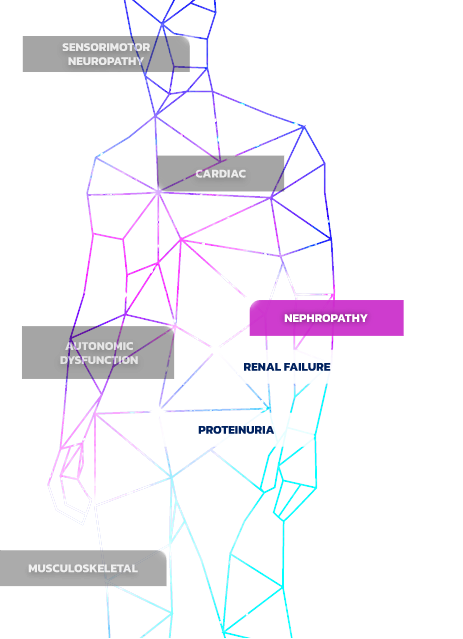




Click or tap categories to view additional red flags.
Tap categories to view additional red flags.
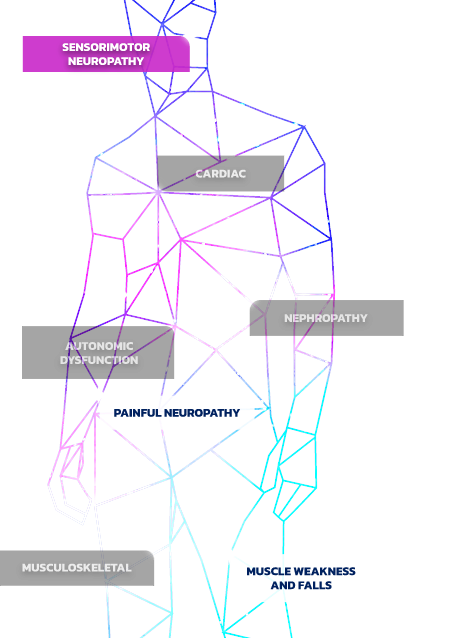
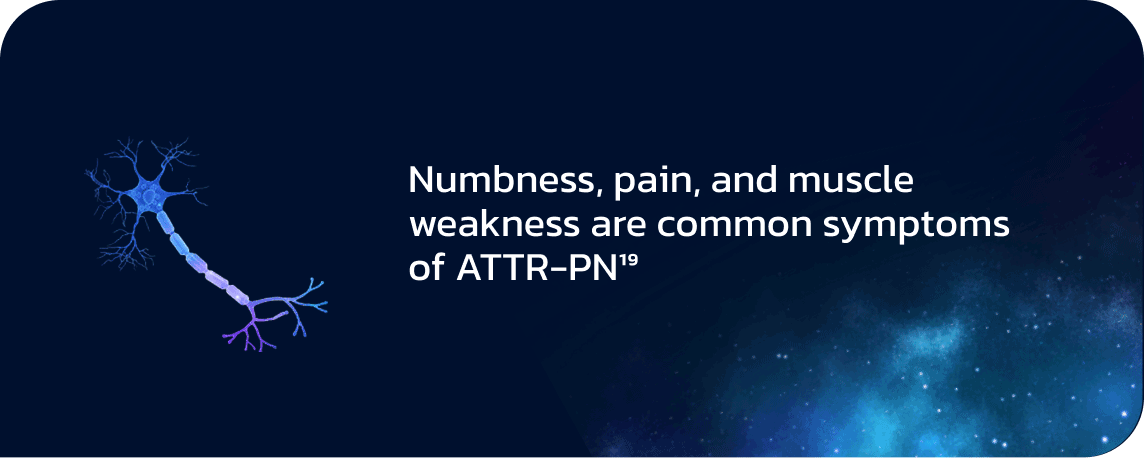
SENSORIMOTOR NEUROPATHY1

Painful neuropathy
in hands and feet

Falls

Difficulty walking

Muscle weakness
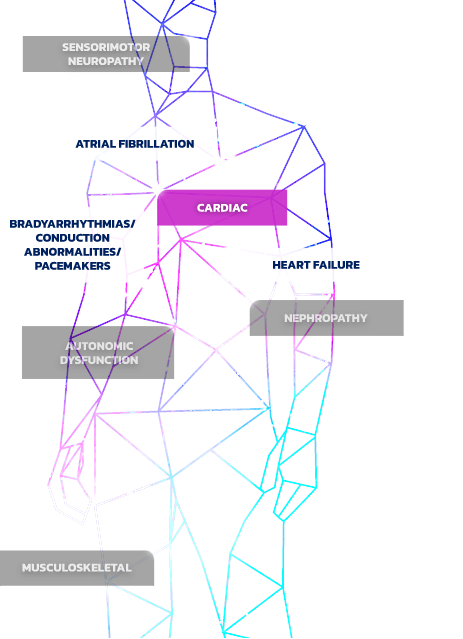
CARDIAC1

HF (right-sided), HFpEF, or intolerance to ACEi, ARBs, ARNi, or beta blockers

Atrial fibrillation

Bradyarrhythmias/conduction abnormalities/need for pacemaker
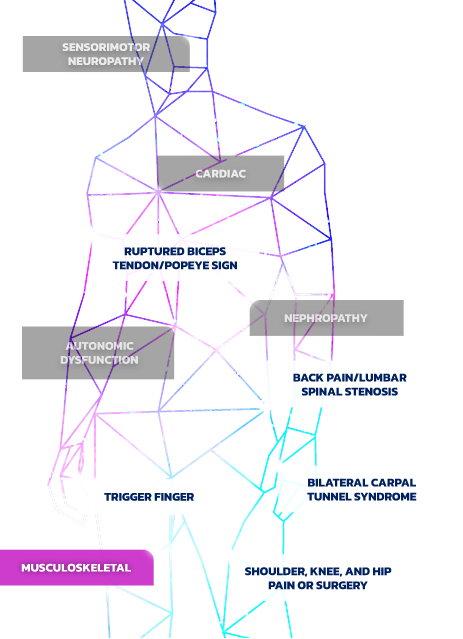
MUSCULOSKELETAL1,5–7

Back pain/lumbar spinal stenosis

Ruptured distal biceps tendon/Popeye sign

Shoulder, knee and hip pain or surgery

Trigger finger

Bilateral carpal tunnel syndrome
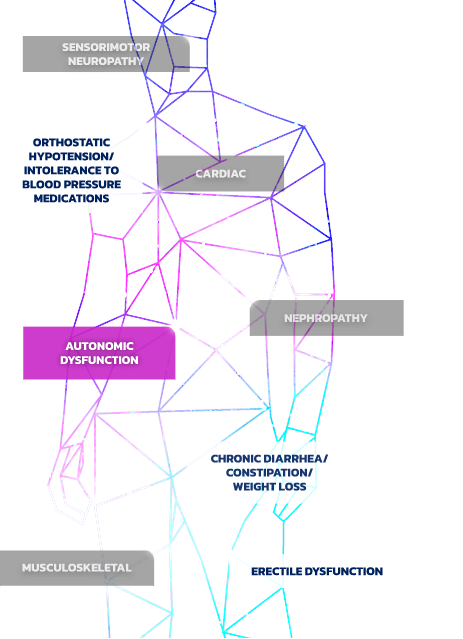
AUTONOMIC DYSFUNCTION1

Orthostatic hypotension

Unexplained weight loss

Diarrhoea

Erectile dysfunction

Constipation
NEPHROPATHY4

Proteinuria

Renal failure
This list of signs and symptoms of ATTR is not intended to be exhaustive.
HFpEF and other cardiac conditions, including atrial fibrillation, arrhythmia and atrioventricular block10
Intolerance to standard heart failure therapies (e.g. ACEi/ARBs and beta blockers)11
Discordance of QRS voltage and left ventricular wall thickness seen on echocardiography12,13
Diagnosis of carpal tunnel syndrome, distal biceps tendon rupture or lumbar spinal stenosis14,15
Echocardiography showing increased left ventricular wall thickness and/or low-flow gradient aortic stenosis and additional echocardiography parameters*12
Nervous system—autonomic nervous system dysfunction, including gastrointestinal complaints or unexplained weight loss16
Figure adapted from Sabbour H, et al. Front Cardiovasc Med. 2021.9
*Echocardiographic, speckle-strain and tissue doppler “red flags”: Heart failure normal or mid-range ejection fraction; increased wall thickness; left atrial enlargement; low stroke volume index; low-flow, low-gradient aortic stenosis (per ESC/EACTS Guidelines);17 low myocardial contraction fraction; advanced diastolic dysfunction; impaired global longitudinal strain with apical sparing; low mitral annular tissue Doppler S' (average septal and lateral annulus).8

ATTR amyloidosis is a progressive and potentially fatal disease caused by the buildup of amyloid fibrils in various tissues and organs1

ATTR amyloidosis progresses to mortality1,18,19
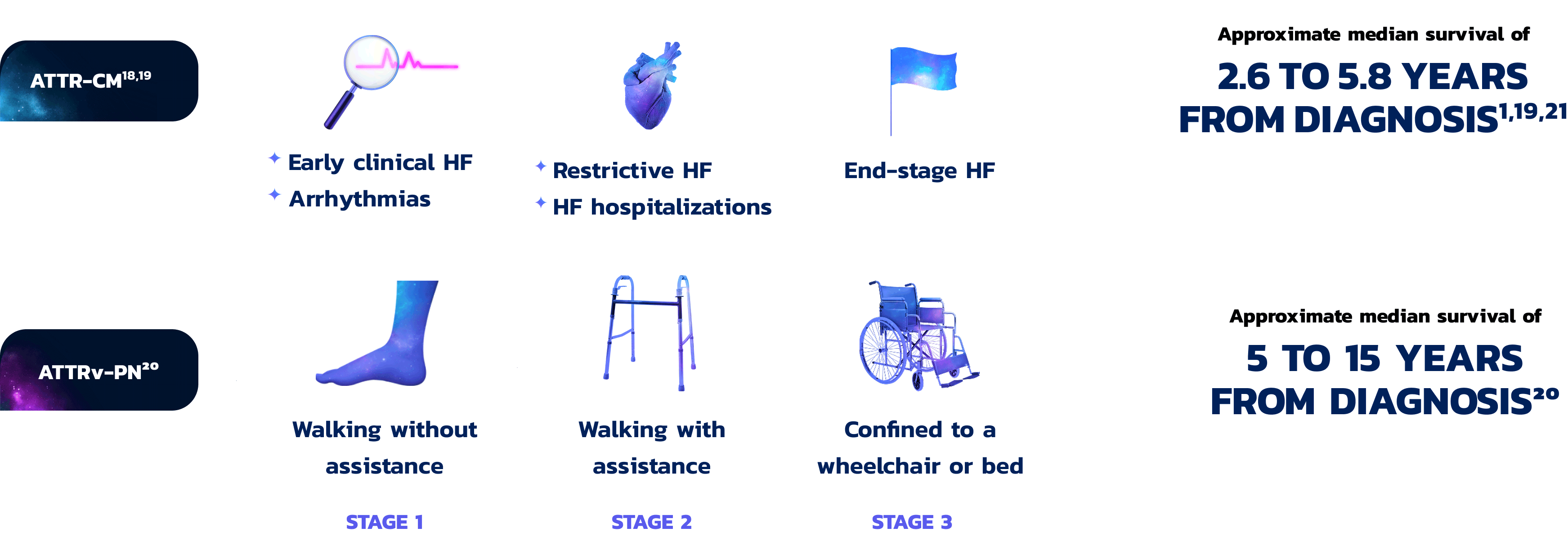
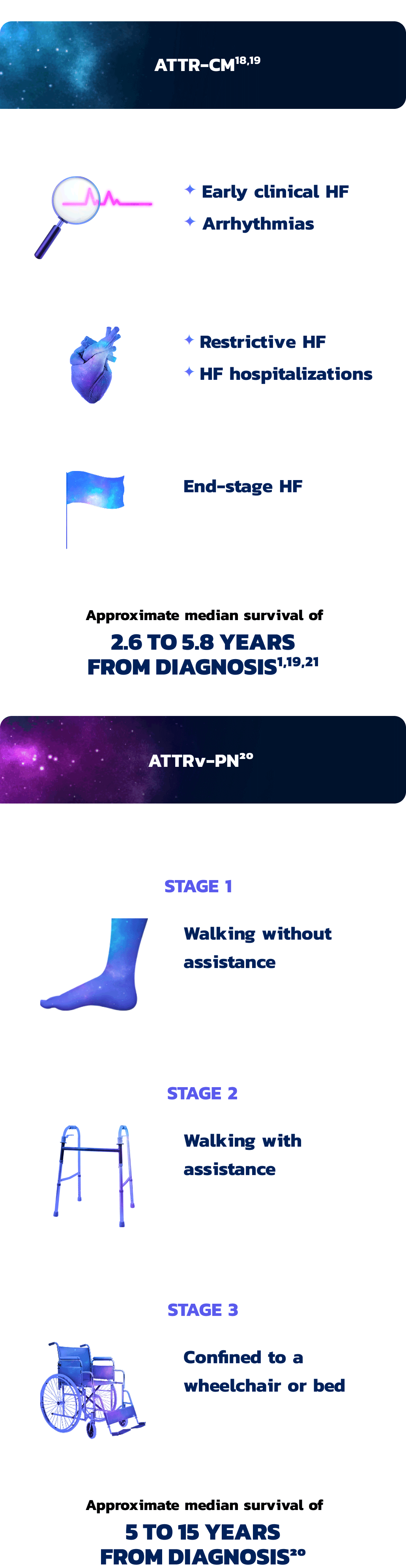
Symptom deterioration may indicate disease progression
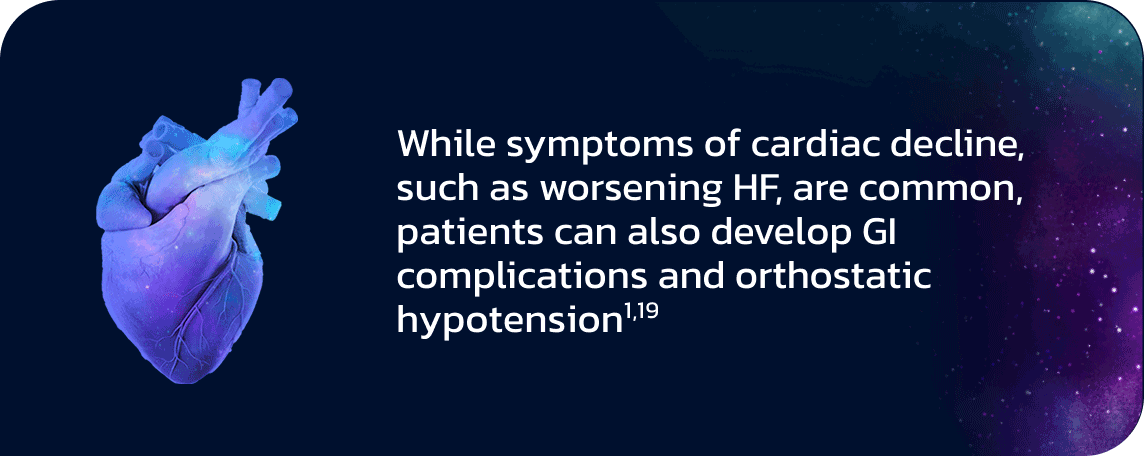
Worsening of symptoms can be a serious and potentially life-altering sign of disease progression1,19

Get in touch
If you have any questions about ATTR amyloidosis in the United Kingdom or would like to speak to an AstraZeneca medical representative, please contact us
GB-62817 I April 2025