Pharmacological treatments

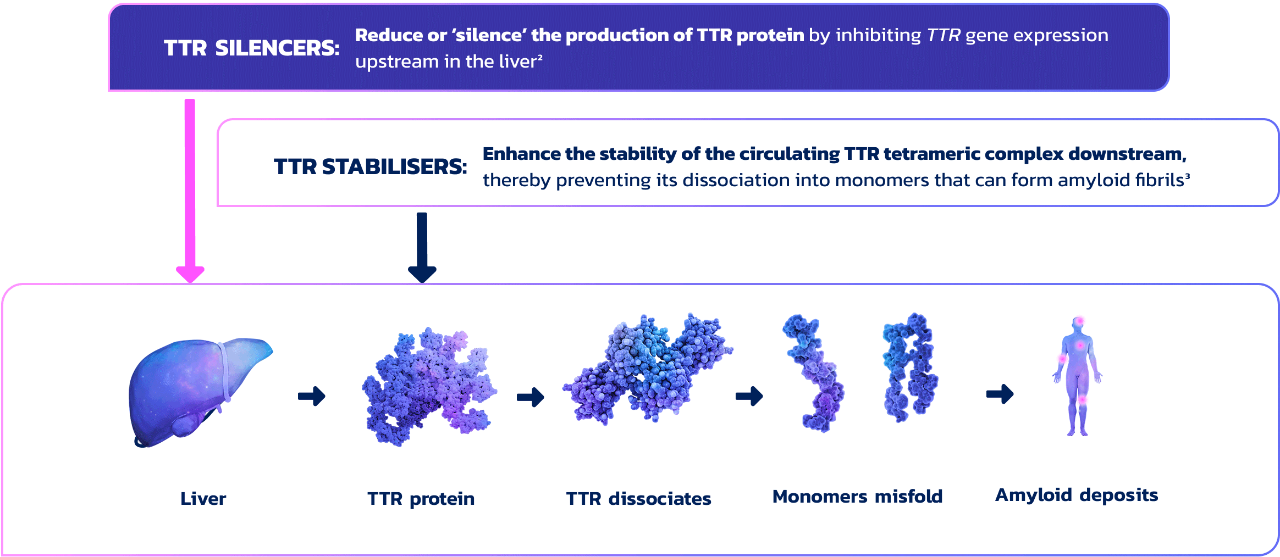
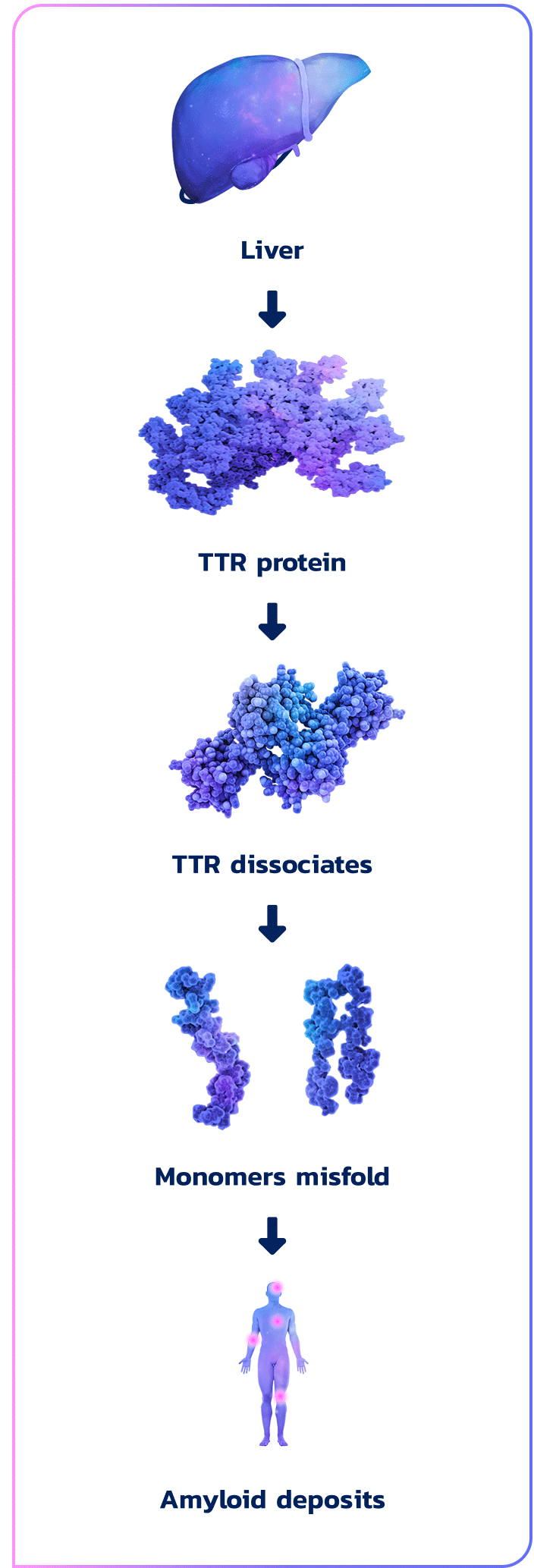
TTR SILENCERS:
Reduce or ‘silence’ the production of TTR protein by inhibiting TTR gene expression upstream in the liver2

TTR STABILISERS:
Enhance the stability of the circulating TTR tetrameric complex downstream, thereby preventing its dissociation into monomers that can form amyloid fibrils3

The approval of LYNPARZA (olaparib) as the first licensed PARPi in gBRCA positive, HER2-negative, high risk early breast cancer patients is supported by data from the OlympiA trial1,2
Non-pharmacological treatments
Liver transplant may be helpful for some patients with hereditary ATTR amyloidosis, in particular for patients with the Val30Met mutation4
Supportive treatments
Early diagnosis and disease-specific treatment are essential to caring for patients with ATTR amyloidosis; however, supportive care is also important to improve nutritional status, maintain exercise tolerance and capacity, and improve and maintain mental health5
- Dietary changes (e.g. small-volume meals with low soluble fibre and fat) and nutritional supplements can be considered in the management of GI symptoms and nutritional status
- Patients with ATTR amyloidosis often experience exercise intolerance; supportive therapy to optimise volume status and maintain sinus rhythm is important. Nutritional interventions also play an important role in improving muscle mass and energy
- Mental health burdens on patients and caregivers can be significant and some patients may benefit from outpatient individual counselling
Early diagnosis is key to earlier treatment which in turn may optimise patient outcomes6–8
Learn about the management of ATTR amyloidosis in this video
Research in ATTR amyloidosis is evolving — expert consensus recommends a diagnostic algorithm for the GP based on initial signs and symptoms of cardiac or neurologic involvement, as well as early genetic testing in unexplained PN, to enable referral of the patient to a multidisciplinary specialised medical centre9
Early diagnosis and treatment may help to slow disease progression8,10
If you suspect ATTR amyloidosis, it is important to refer your patients to the National Amyloidosis Centre to be assessed.
It is important to suspect ATTR amyloidosis early
See the PATTRNS and

Suspect
Recognise the signs and symptoms of ATTR amyloidosis
Diagnose
Identify patients with ATTR amyloidosis early
Refer
Enable early intervention to slow disease progression and improve quality of life4,8,10
Treatment research to improve patient outcomes is ongoing2
Timely diagnosis and treatment of ATTR amyloidosis may help to improve patient outcomes11

Get in touch
If you have any questions about ATTR amyloidosis in the United Kingdom or would like to speak to an AstraZeneca medical representative, please contact us
GB-62820 I April 2025