Early and accurate diagnosis is key to improving survival outcomes1–4

Patients with ATTRv amyloidosis face a diagnostic delay of
~3 years5
50% of patients with ATTRv amyloidosis saw
≥3 physicians
before receiving the correct diagnosis6
Patients with ATTR amyloidosis are missed among a broader population
16% (n=24/151) of elderly patients with severe aortic stenosis (AS) undergoing transcatheter aortic valve replacement had ATTR-CM*7
13% (n=16/120) of elderly patients with HFpEF had ATTRwt†8
7% (n=7/98) of patients undergoing carpal tunnel release surgery for idiopathic carpal tunnel syndrome (CTS) were found to have ATTR amyloidosis‡9
*Prospective cohort study in which 99mTc-PYP cardiac scintigraphy was performed on 151 elderly patients with severe AS who underwent TAVR, to screen for and determine the prevalence and phenotype of ATTR cardiac amyloidosis;
†Prospective, cross-sectional, and unicentric study in which 99mTc-DPD scintigraphy was performed on 120 patients ≥60 years old admitted due to HFpEF with LV hypertrophy, to screen for and determine the prevalence of ATTRwt;
‡Prospective, cross-sectional, multidisciplinary study of 98 patients undergoing carpal tunnel release surgery to determine the prevalence and type of amyloid deposits in the tenosynovium and whether simultaneous cardiac involvement could be identified using biomarkers and advanced cardiac imaging.
Watch this video to learn about diagnosing ATTR amyloidosis
The steps to diagnose ATTR amyloidosis in practice
Screening for cardiac amyloidosis
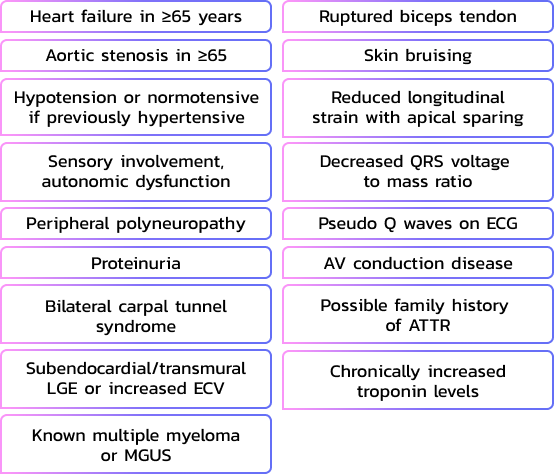
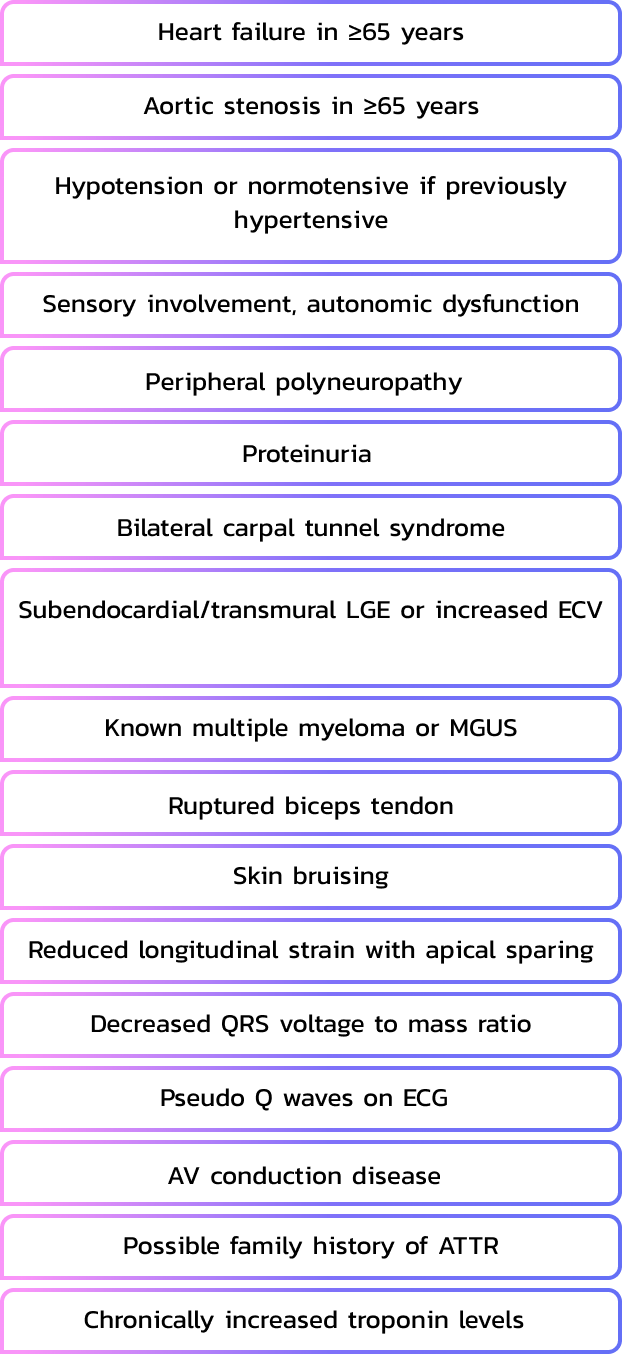
According to the 2023 ESC Guidelines for the management of cardiomyopathies, ATTR-CM should be suspected in patients with increased LV wall thickness in the presence of cardiac or extracardiac red flags and/or in specific clinical situations, particularly in patients >65 years of age10

Left ventricular wall thickness ≥12 mm + ≥1 of
Adapted from the 2023 ESC Guidelines on the management of cardiomyopathies10
Diagnosing ATTR-CM10
Signs and symptoms, ECG, ECHO or CMR suggestive of cardiac amyloidosis
ECG: Discordant QRS voltage for degree of increased LV wall thickness on imaging, conduction abnormalities, and rhythm disturbances11–13
ECHO: Increased LV wall thickness, Grade 2 or worse diastolic dysfunction, and decreased global longitudinal strain with relative apical sparing11–13
CMR: Expansion of extracellular volume and diffuse subendocardial or transmural late gadolinium enhancement11–13
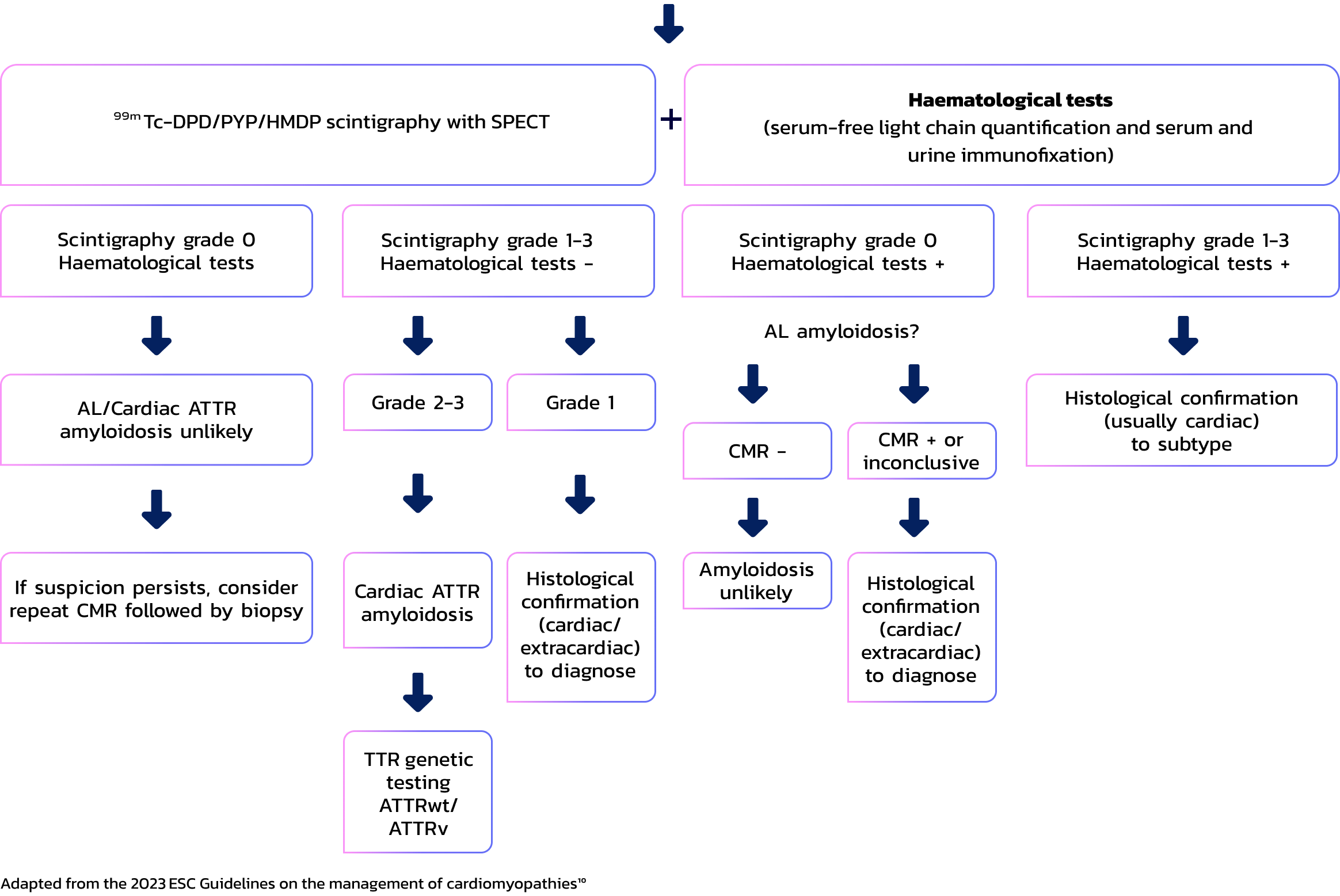
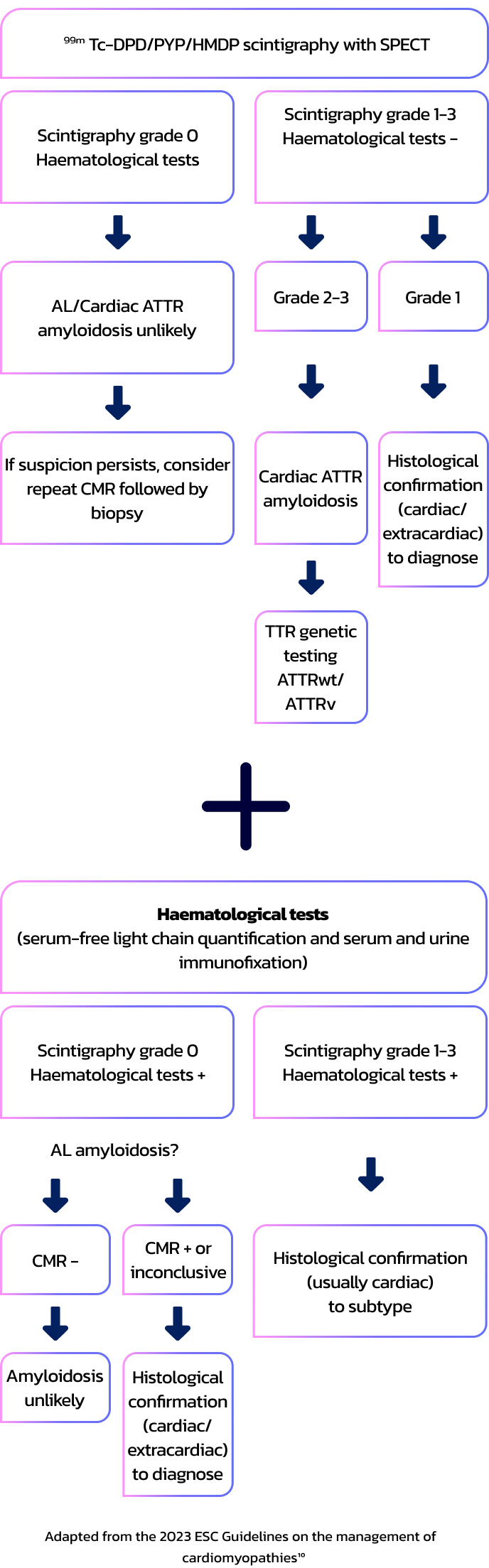
Consider biopsy if cardiac scintigraphy is negative or equivocal and clinical suspicion is high11,13
Light-chain cardiac amyloidosis (AL-CM) may present similarly in ATTR-CM but is caused by a plasma cell dyscrasia; it should be ruled out by screening for monoclonal protein with sFLC, SIFE, and UIFE11,13
 Consider biopsy if cardiac scintigraphy is negative or equivocal and clinical suspicion is high11,13 Light-chain cardiac amyloidosis (AL-CM) may present similarly in ATTR-CM but is caused by a plasma cell dyscrasia; it should be ruled out by screening for monoclonal protein with sFLC, SIFE, and UIFE11,13
Diagnosing ATTRv-PN
Suspicion index for diagnosing ATTRv-PN in endemic and non-endemic areas14,15
ATTRv-PN should be suspected in patients with progressive and disabling polyneuropathy, particularly in elderly patients. The disease should also be considered in patients with neuropathy and >1 red flag symptom suggestive of multisystemic involvement
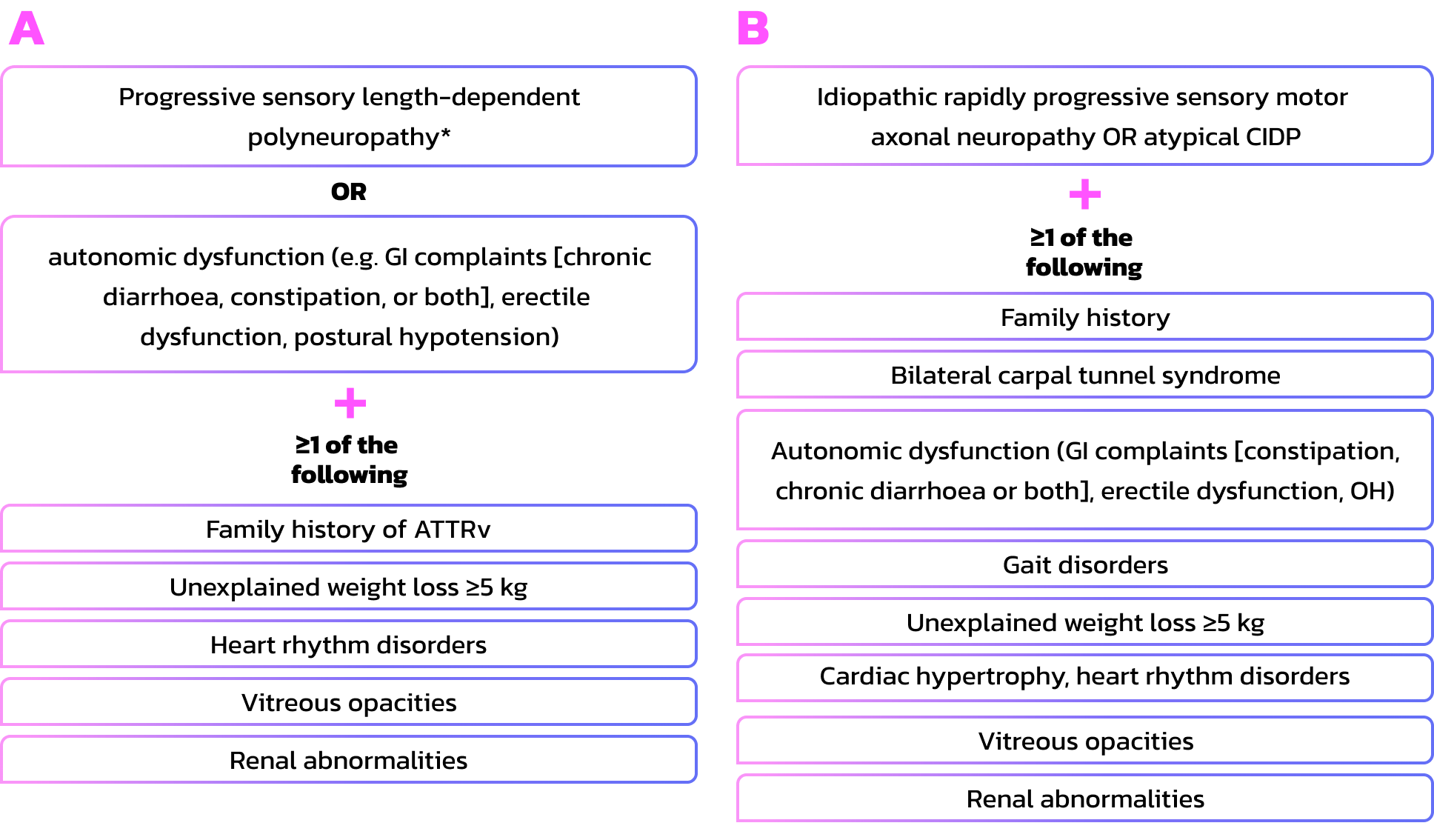
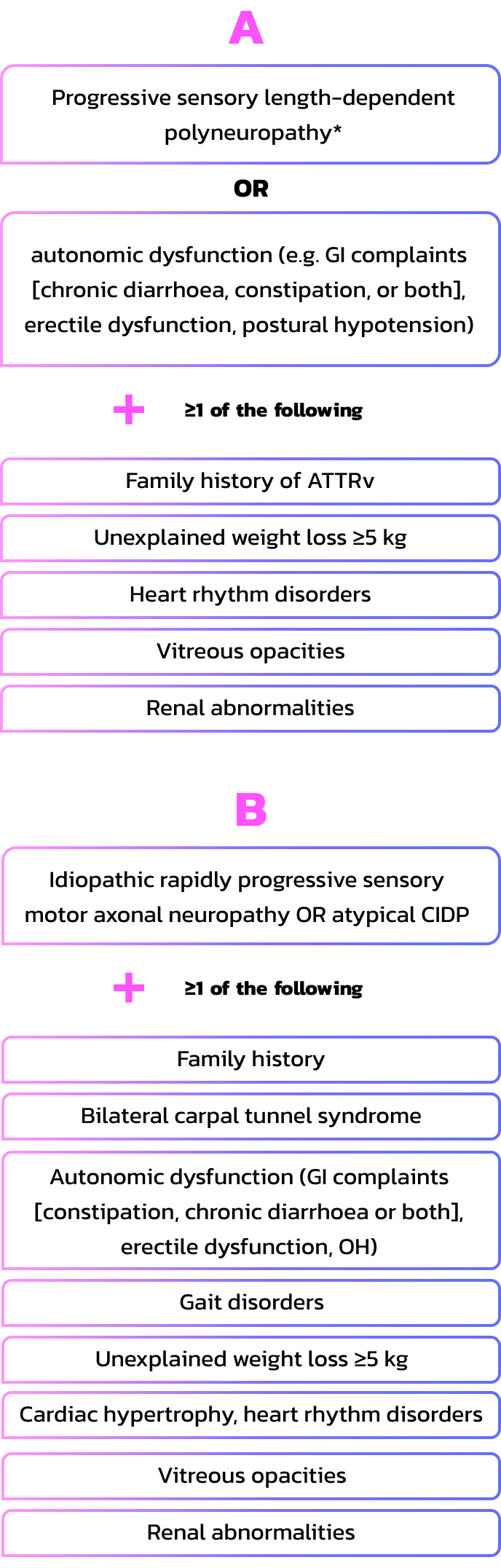
Adapted from Conceição I, et al. J Periph Nerv Syst. 2016 and Adams D, et al. J Neurol. 2021
Expert consensus recommendations to improve diagnosis of ATTRv-PN14
Clinical suspicion of amyloid neuropathy14

Electrophysiological tests are useful in demonstrating large fibre neuropathy:16
- Nerve conduction studies (NCS)
- Electromyelography
Confirmation of ATTRv amyloidosis14
Biopsy of amyloid deposition
- Possible biopsy sites: labial salivary gland, subcutaneous fatty tissue of abdominal wall, skin, kidney, nerve and gastrointestinal tract (including submucosa)
- Congo red staining with characteristic green birefringence under polarised light
Amyloid typing
- Immunohistochemistry or mass spectrometry
DNA sequencing
- Analysis of the amyloidogenic TTR variant
- Can support or exclude a diagnosis of ATTRv
Figure adapted from Adams D, et al. J Neurol. 202114
It is important to suspect ATTR amyloidosis signs and symptoms to facilitate earlier diagnosis and treatment1
Early intervention for ATTR amyloidosis may improve quality of life1,2,4,15,17–20

Get in touch
If you have any questions about ATTR amyloidosis in the United Kingdom or would like to speak to an AstraZeneca medical representative, please contact us
GB-71185 I December 2025